 Eco123 Revista da Economia e Ecologia

There are people who turn a blind eye to major problems that they are perfectly capable of solving; then they sit in a corner and wait for the problem to solve itself. In 2016, severe wildfires raged in the municipality of Boticas, north of Braga, destroying around 1,700 hectares of forest in the very north of Portugal. The local agricultural cooperative Boticas (CAPOLIB) therefore looked for strategic partners and succeeded in solving the problems in an area of 60 hectares without government subsidies. Joining the partnership on the side of nature was the WWF and on the side of business was the well-known company Bel Portugal, which produces and sells various types of cheese and sweets worldwide. The three very different partners formed a community that promoted the reforestation of the area with young oak and pine trees. Over three years, the cheese producer from the Azores invested around 360,000 euros in reforestation. Its goal, it says, is to achieve zero emissions in order to fulfil the 2015 Paris Climate Agreement.
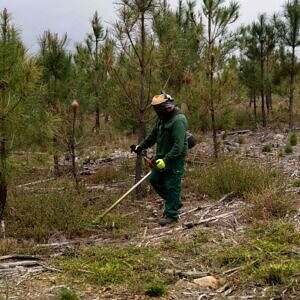 When interviewed by ECO123, Bel Portugal explained that its project is a response to the destruction of nature and aims to restore degraded forest ecosystems, improve the traditional agricultural and pastoral system, promote biodiversity and increase the landscape’s resilience to fires.
Bel Portugal produces and distributes the cheese brands Babybel and ‘A vaca que ri’ and specialises in the ‘gogosqueez’ brand of sweets, a competitor of the Haribo company.
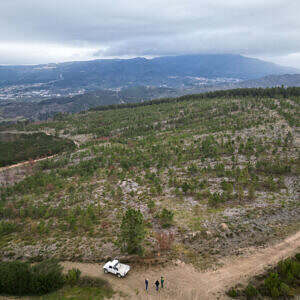 Paula Amaral, the Sustainability Manager at Bel Portugal, told ECO123: “At Bel, we believe that the future of food depends on our ability to form partnerships with farmers involved in innovative, sustainable and regenerative agriculture. This project shows that it is possible to restore landscapes, promote age-old practices and support local communities with lasting, multifunctional solutions.”
ECO123 also spoke to Vasco Silva, the Forestry Coordinator of WWF Portugal, about the project that is being developed 660km to the north of Monchique. His comment: “With this project, everyone involved has succeeded in restoring traditional agricultural practices and creating a more resilient landscape that is rich in biodiversity. The multifunctionality of the landscape is one of the best solutions for increasing the resilience of local communities and areas to forest fires, while improving the natural resources of this region.”
 Next week, we will be talking to the inventor of WetNet, a firefighting system that can be used on a small scale to protect private forests, as well as entire communities such as Boticas or Monchique (5,000 inhabitants), from climate disasters. (www.wetnet.pt/en)
 Because there are still people who keep their eyes open when faced with major problems which they are perfectly capable of solving and then sit down together and create a firefighting system to actively tackle the problem of climate change. Everything is possible, dear neighbour…