 Eco123 Revista da Economia e Ecologia

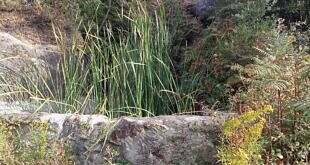
The three-hectare Esgravatadouro Botanical Forest Garden, run by ECO123 magazine in Caldas de Monchique in southern Portugal, is located precisely in the heart of the Natura 2000 network zone declared by the EU Commission. It is an oasis in the desert of eucalyptus trees planted in Nature Reserve No. 0037, which was proclaimed by the European Commission back in 1992.
 I quote: “The Natura 2000 network is a Europe-wide ecological network whose aim is to ensure biodiversity by conserving or restoring natural habitats and wild plants (including native tree species) and animals in a favourable conservation status through the protection, management and monitoring of species and the regulation of their use. These objectives are implemented taking into account ecological, economic, social, cultural and scientific requirements, as well as regional and local characteristics…”


This is how the CCDR (Comissão de Coordenação e Desenvolvimento Regional – Regional Coordination and Development Commission) in Faro expresses the network’s aims on its website. A text without any heart or soul, written by bureaucrats and thrown at the feet of its readers. The Algarve Regional Coordination and Development Commission, established by Decree-Law No. 36/2023 of 26 May, is a public institution with special status that forms part of the indirect state administration. It has administrative and financial autonomy, as well as its own assets, and is subject to the supervision and control of the Deputy Minister for Territorial Cohesion, in accordance with Article 15 of Decree-Law No. 32/2024 of 10 May. There is no provision made for its eventual control by citizens. But its task is a powerful one, for it distributes EU subsidies in the Algarve. Portuguese civil servants find it difficult to imagine what a Natura 2000 network is, because they work in an air-conditioned office and have little contact with nature. So what can we expect from the CCDR?

The various forest fires that occurred between 1991 and 2018 destroyed the Natura 2000 network in Monchique. ECO123 has therefore set itself the goal of giving something back to nature, because for 12 years we have been transforming printed paper, i.e. trees, into magazines. Even though the paper was recycled, it was still published with stories about business and ecology, and in colour. We are very aware of what we are doing here and now and how we want to work tomorrow. In our new botanical forest garden, we are planting a mixed forest of native tree species and we now publish our articles online every Saturday instead of being printed on paper. We still have to get used to this. Both you as readers and we as your journalists.

Human-induced climate change is a fact and is changing life on Earth. Disasters such as forest fires are now more likely to occur due to global warming and they teach us a very important lesson: people, authorities and businesses must all adapt to new circumstances. The best way to avoid losses is to implement effective preventive measures, such as the more robust construction of buildings and infrastructure, and the protection of forests in order to better withstand natural disasters. Such precautions can help maintain insurance premiums at a reasonable price, even in high-risk areas. Above all, according to Dr Thomas Blunck, a member of the Board of Directors of Munich Re – one of the three largest reinsurance companies worldwide, based at Königinstraße 107 in 80802 Munich, Germany – no new constructions should be permitted in high-risk areas, in order to limit future risks.

As the company says: “Munich Re is a provider of reinsurance, primary insurance and insurance-related risk solutions. The Group consists of the reinsurance and ERGO business units and the asset management company MEAG. Munich Re operates worldwide and is active in all areas of the insurance business. Since its foundation in 1880, Munich Re has been known for its unrivalled risk expertise and solid financial strength. Munich Re uses its strengths to promote the business interests of its clients and technological progress. In addition, Munich Re develops cover for new risks such as rocket launches, renewable energies, cyber risks and artificial intelligence. In the 2024 financial year, Munich Re generated insurance income of €60.8 billion and a net profit of €5.7 billion. As at 31 December 2024, the Munich Re Group employed around 44,000 people worldwide…”
This is how the reinsurer describes itself. ECO123 deals with the consequences of man-made climate change. How high can the risk be that an insurance company takes when insuring a property, for example a house in a high-risk area such as Monchique or Bordeira, to name just two places in south-western Europe? And how have the forest fires in Los Angeles changed the lives of reinsurers? In a multi-part series, with individual stories appearing online every Saturday morning, we examine the economic consequences of the environmental destruction caused by climate change. You should stay optimistic, however, because we humans have it in our power to determine the rise in global temperatures ourselves. Our behaviour makes all the difference. For example, we can choose between planting undemanding trees or water-intensive invasive species: this small difference makes a big impact. Whether we plant monocultures of eucalyptus or a mixture of umbrella pines, cork oaks and carob trees makes a big difference. While monocultures suck groundwater out of the soil, an assortment of native trees is the friendly alternative. If the water remains in the soil, the forest can survive one or two winters with less rain. The same applies to humans, because our children and grandchildren in the next generations will also want to use groundwater. So, it’s also about thinking about the future. How sustainable will we humans be in 2030? These are questions that ECO123 asks: we seek the answers from experts and discuss them with you here.