 Eco123 Revista da Economia e Ecologia

25/07/2026 – 01/08/2026 by Uwe Heitkamp
Edition 29.2026 – Continuation
The fact that Portugal, of all places, is saving the world is no fairy tale. Would you like to know how they’re doing it?
At the moment of writing, the old forest near Fontainebleau, south of Paris, is on fire. With temperatures exceeding 40 degrees Celsius, more and more farmers are worrying about their crops – not only in France, but now in Germany too. One heatwave follows another, and the dryness of the soil is now forcing more and more farmers to give up. Forests are burning in Sweden too.

When a forest has been planted to grow into a mass of trees that can be felled if there is a buyer to turn them into paper (windows and doors, or furniture and timber), wherever it may be, something is being lost: our relationship with Nature. What does a tree mean to me if I plant it from a seed and then tend to it for a year, watering it every evening? I look after it. I give every tree a name. Do I then have the right to commercialise it? Do I have the right to chop it down?
The idea first began to grow in my heart seven years ago, when we decided that we wanted to build, cultivate and protect our own forest by planting a thousand new trees in the Botanical Forest Garden in Caldas de Monchique. Because, back then, we had already started to imagine that there would be no point in planting any more trees, since the next forest fire would destroy the young trees all over again. Give up? Never! Our primary goal: to find solutions and slow down climate change.
When was the Botanical Garden in Lisbon founded? How long did it take the botanists to plant a small forest on a plot of land measuring three hectares in a major European city? Become a member of the Friends of the Garden and then you can find out.
What obstacles do we have to overcome today in order to plant and cultivate a natural mixed forest? Most of the obstacles are to be found inside our very being. Once we have overcome our own personal obstacles, we then have to overcome the natural climatic obstacles. Heat, a scorching sun, high temperatures, low humidity and dry, depleted soils, etc. These are our summers. And what is the weather like in winter? Days of torrential rain, storms, floods, power outages, landslides and so on.

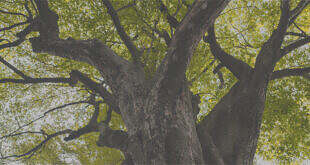
It is summer. When you attempt to interpret these extraordinary days and nights, whose climatic extremes no one has ever experienced before, the silence of the politicians becomes all the more striking. I am standing in Monchique, in southern Portugal, on a granite rock located in our Botanical Forest Garden, and I am holding a thermometer. It’s 38 degrees Celsius. There are days when it’s definitely hotter. It’s 5 pm. After fifteen minutes, it is all too much for me and I move into the shade beneath the enormous branches of our hundred-year-old umbrella pine. Another fifteen minutes pass, and the thermometer keeps on decreasing. It finally stays steady at 28 degrees Celsius. The temperature has dropped by ten degrees. I could conduct a similar experiment with water, but I don’t have to go to a chemistry laboratory to do that. I simply place a 500-litre cistern against the trunk of the umbrella pine, in the tree’s shade. The temperature of the water remains constant at 25 degrees Celsius. Our gardener, who is also the webmaster of the ECO123 magazine and website, uses this water not only for showering but also for cooking, washing dishes and making tea. We often experiment with different devices, including the use of solar cookers. After all, everything that we humans touch and need is energy. The sun represents pure growth when we use it in a way that allows us, for example, to plant young trees in the shade of larger, more mature ones. Why don’t I hear anything from our politicians when it comes to solutions for lowering temperatures and slowing down climate change?
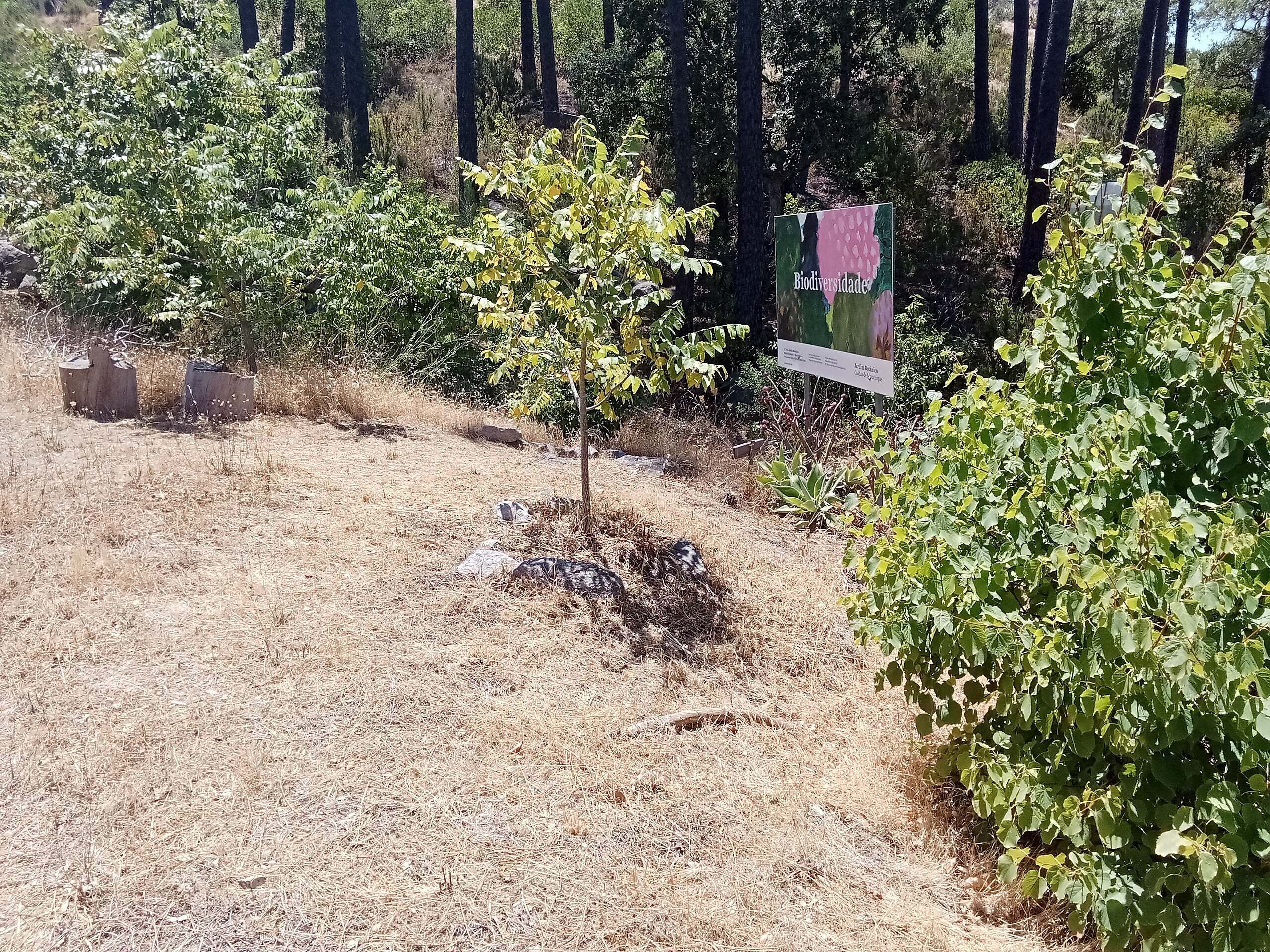
So, I return to my botanical forest garden in Caldas de Monchique. The Botanical Forest Garden doesn’t belong to me, of course, because my time is running out anyway, and I’m already well past my prime. The Botanical Forest Garden is managed by our cooperative. It’s the same cooperative that publishes this magazine: now online, but formerly printed on paper. Since the printing company is no longer able to obtain the recycled paper, we refuse to print on paper produced from eucalyptus trees by the “Navigator” company.
It’s all quite simple. If the climate – that is to say, the temperature in the shade of a tree – is ten degrees Celsius cooler, then how cool will it be in a forest of, let’s say, a thousand trees? That’s my idea. And, although this idea is a local one, it can be applied anywhere: in the Algarve, in the Alentejo, but also in Italy, Greece and France – anywhere where the heat is unbearable.
It’s all about planting mixed forests. That’s why I bought half a valley and have been transforming it into a diverse forest over these years, months and days. All of this takes time, and I make sure that I have that time because life has given me the chance to do something meaningful with it. Greenpeace talks about prevention. I’ve taken that word to heart, too. The WWF has also been working on the issue of forest fires for years and has published studies on the subject, which can be accessed at https://www.wwf.org.uk.

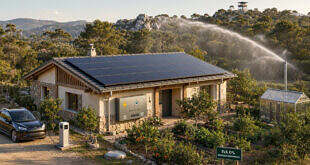
Let’s get practical now. At first, we thought of using a small excavator to dig some trenches for the water pipes in the forest. Then my colleague took hold of a hoe and began to dig the trenches, approximately 40 cm deep, manually and with great care. We didn’t want to destroy any of the roots of the old trees, and with the hoe we were able to carefully clear the forest floor of its moss and herbs. We then began the preparatory work for installing the sprinklers of the extinguishing system, laying hundreds of metres of water pipes along the forest floor. It all looked very simple on paper, but, in reality, we had to overcome the challenging problem of the very uneven terrain. We took our time laying the pipes very carefully, below the roots.
In order to have a better view over the whole garden, we built a bunker a little higher up, in the middle of the forest, which would function as a kind of command centre. The pump was housed inside the bunker, while the filter that keeps the water clean was placed in front of it, together with the taps for, initially, seven, then eight, nine and, finally, ten sprinklers. The plastic pipes were flexible and could be laid in such a way as to navigate around bends; each individual PVC pipe fed into a metal elbow and, from there, into a three-metre-long metal pipe, with the sprinkler then being screwed into its top. Everything that sticks out of the ground is made of galvanised steel. What is hidden underground is made of PVC. The pump and the entire piping system, which has a diameter of 1¼ inches, are designed to withstand a pressure of ten bar.
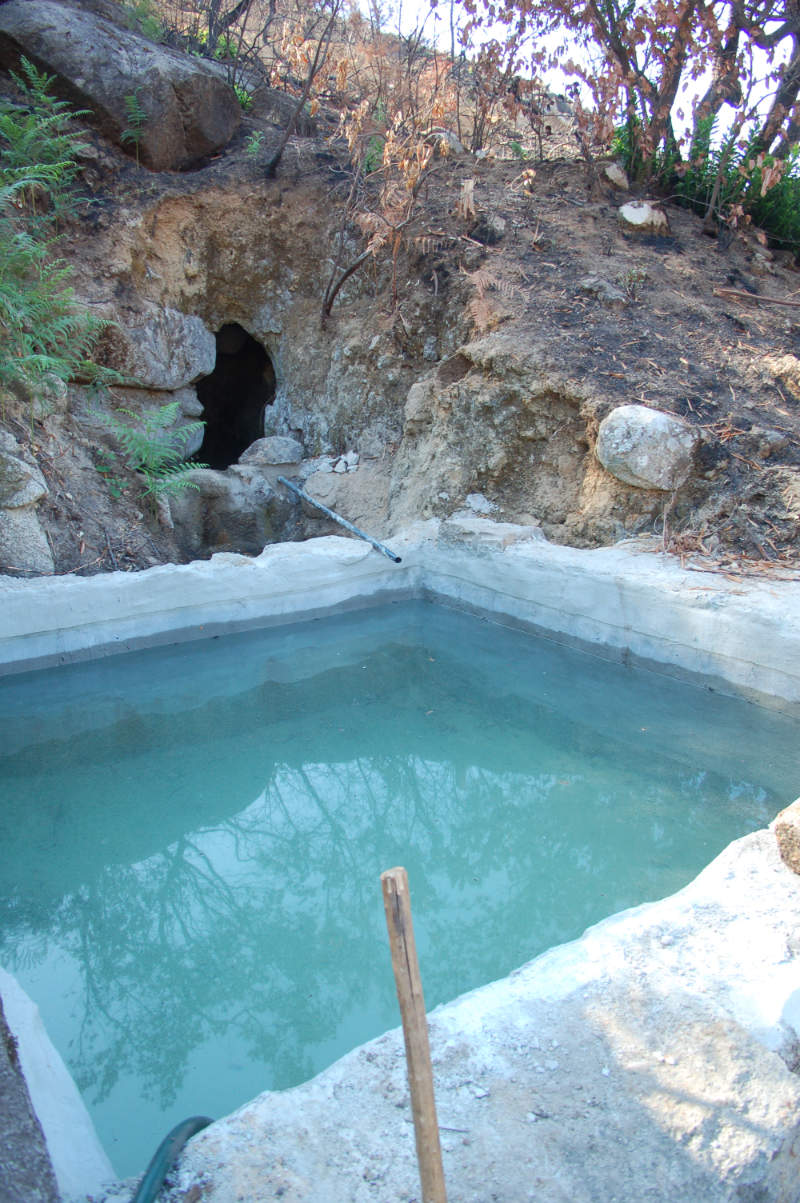
Where do we get the water from? The publishing house where we live and work has a huge roof all around the building, with gutters at the sides. We collect every drop of rainwater in winter – and we distribute this water across several cisterns. The cistern, which we never touch, holds 50 m³ of pure rainwater for the sprinkler system. If that’s not enough, we have reserves stored in other cisterns. The construction of the WetNet sprinkler system took us six months to build, including the preparatory work and the financing. Our subscribers donated almost 10,000 euros and received compensation in the form of subscriptions and advertising. But we also received a donation of 5,000 euros from a non-profit organisation that wanted to support our forest project.
ECO123: “We want to stop the global destruction of Nature and the environment and create a future in which people and Nature can live in harmony with one another.” Who wrote this sentence in their policy programme?


2026: Forest and vegetation fires in Europe have already reached alarming proportions this summer – and the situation continues to worsen. In Andalusia, at least twelve people have died; on the outskirts of Paris, emergency services are battling flames in the Fontainebleau forest; and major fires are also raging in Portugal, Greece and Italy. Since the beginning of the year, around 155,000 hectares have already burned across the EU – about 16% more than the long-term average for this time of year. Currently standing at 1,057, the number of fires is more than double the average for this period annually.
Video by Jeremy Walton
Saving the world means planting and protecting mixed forests. Save the forest, and you’ll solve the heat problem. Take action. That’s why, in 2020, we at ECO123 planned, prepared and implemented the sprinkler system for the forest in Caldas de Monchique. Everything was completed in 2022 and we are currently preparing for the alternative electrification of the pumping system. The emergency generator, which currently runs on fossil fuels, will be replaced in the future by a small solar power plant. We are constantly refining and perfecting our system. If you are also interested in protecting your forest, you can schedule an appointment with us every Saturday morning, and we will show you how the sprinklers operate.


Please bring a towel and an umbrella.
You might get wet: https://www.wetnet.pt
Seminars: October to December 2026, every first weekend
Where: Caldas de Monchique, Esgravatadouro (Portugal), 10 am.
When: October 3rd/4th, November 7th/8th, December 5th/6th
Themes: How do I protect myself from forest fires? How do I build a sprinkler system?
Register by email at editor@eco123.info