 Eco123 Revista da Economia e Ecologia

14/11/2026 – 20/11/2026 by Uwe Heitkamp / Photos by Jeremy Walton
Edition 45.2026
The rain is coming. Just as it does every autumn – sometimes earlier, sometimes later – the first rain falls in the Algarve in October or November, after a long, hot, dry summer. The trees I have planted in the Caldas de Monchique Botanical Garden over the last few winters have been waiting a long time for this rain. I saw the clouds coming, days before it rained, like a dark wall that was slowly and sluggishly approaching us. That is the beauty of Monchique: the anticipation of what is to come. The rain clouds have travelled a long way across the Atlantic, and with them comes the wind that pushes the low-pressure system towards the Monchique mountains and their last remaining forests – the ones that the wildfires have left us with.
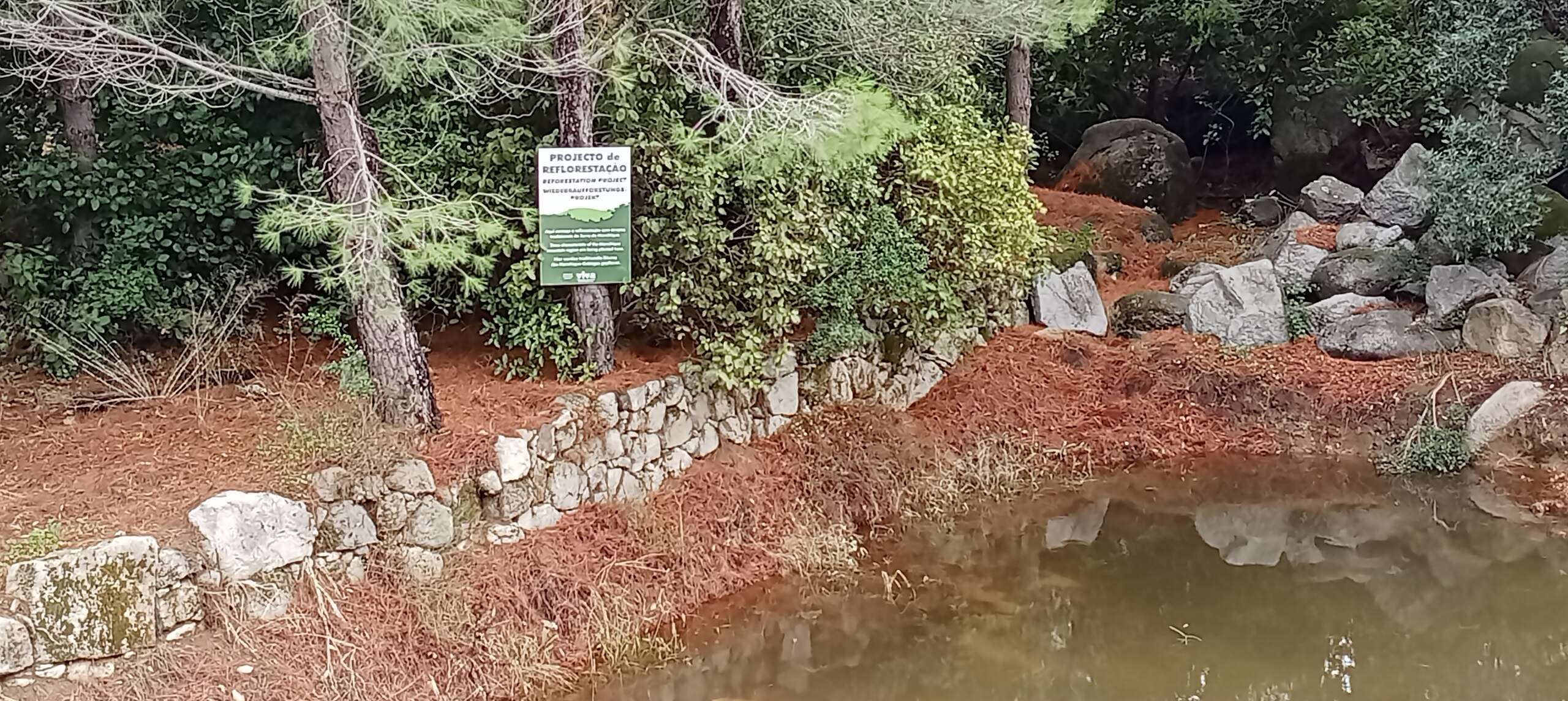
With the rain comes winter. The dry earth becomes wet. And then, after two or three weeks, the soil is ready for the next native tree species to be planted: cork oaks, chestnut trees, walnut trees, oaks (Quercus canariensis). We have set ourselves the task of preserving this natural woodland.
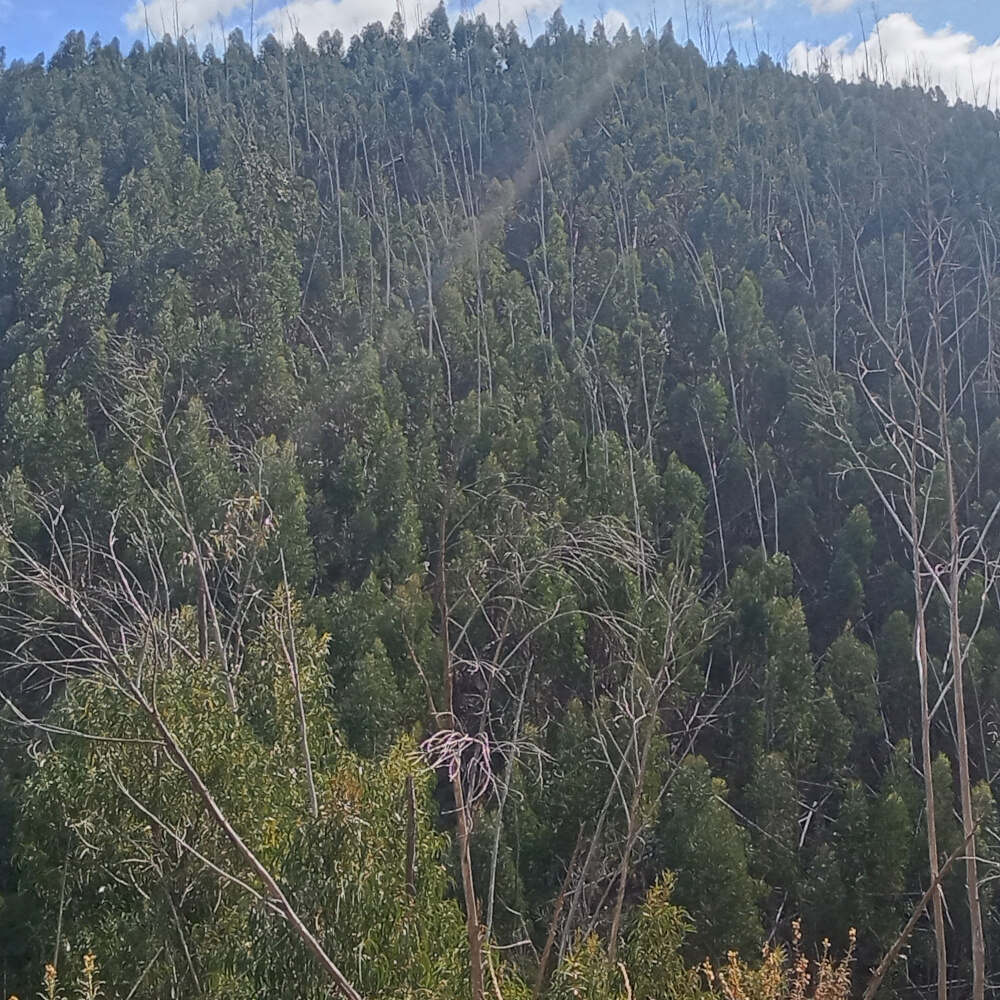
If only it weren’t for the paper industry! The primary destructive force is the deforestation of native woodland and the planting of monocultures. By now, more than 75 per cent of the formerly natural forests have been converted into industrial eucalyptus plantations. This has consequences. Eucalyptus is a water-intensive, fast-growing tree. And it is dangerous. It catches fire easily, and the forest fires that it provokes are almost impossible to extinguish. That is why there are fires every year in Portugal and every few years in Monchique. Of Portugal’s total land area of just under 92,000 km² (mainland excluding islands), more than 10,000 km² is planted with highly flammable eucalyptus. This is the forest viewed as an industrial resource.
The second destructive force is global warming. And, together, these two forces reinforce one another: every area that is cleared or burned heats up the surrounding environment, because the cooling effect caused by the evaporation from the trees and the forest is lost. And the hotter and drier it gets, the more easily the remaining forest all around catches fire. Less forest leads to more heat, which leads to even less forest. It is a vicious circle.
A healthy tree sequesters carbon by drawing CO₂ from the air and storing it in its wood. This process makes a healthy forest an active ‘green lung’. When a tree burns, the process is reversed: first, the fire itself releases carbon; then the damaged tree slowly dies and can no longer absorb CO₂; and as it rots away over the years, it releases the carbon it has stored throughout its lifetime back into the atmosphere. With a delay of several years, the carbon sink thus becomes a source of CO₂. Forest fires fuel climate change and accelerate it. That is why we at ECO123, the parent organisation of the Botanical Garden in Caldas de Monchique, developed a forest fire prevention system in 2020.
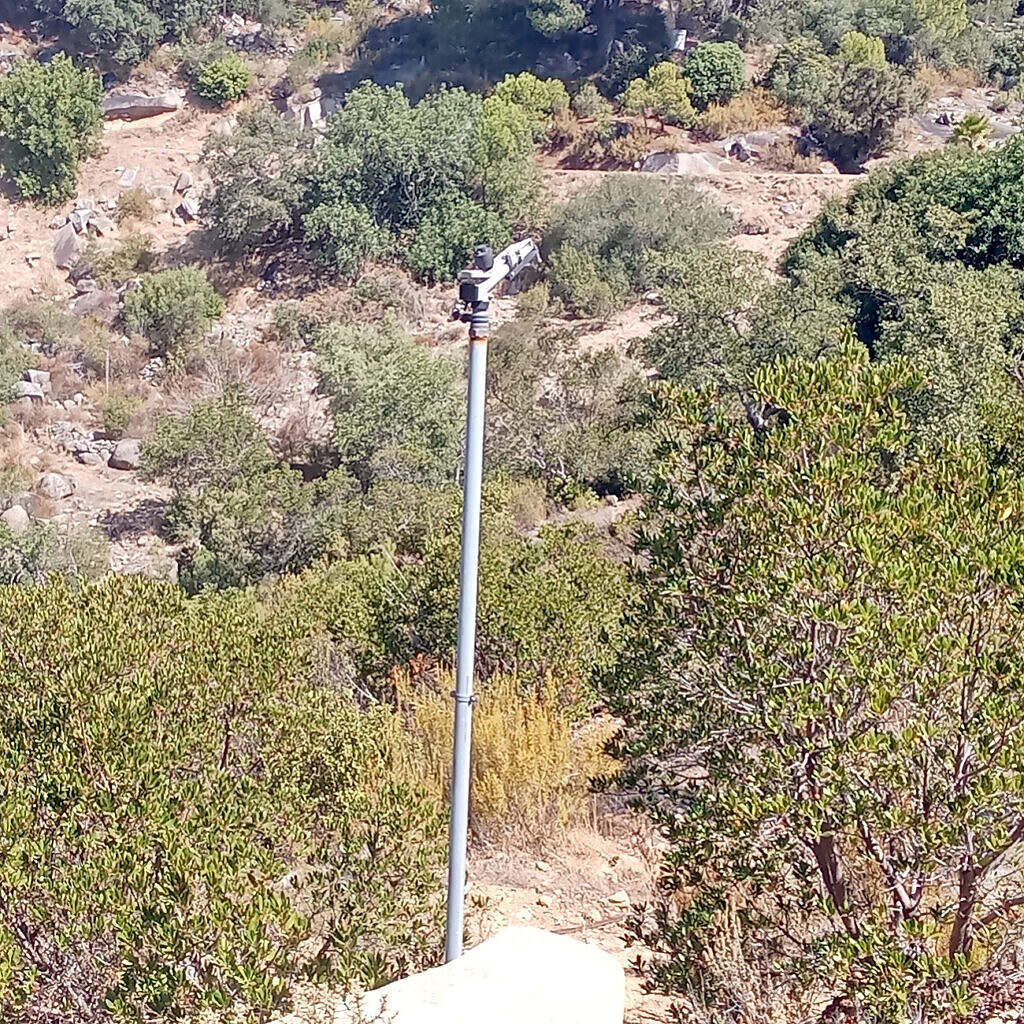
In the forest, we’ve laid a network of water pipes underground, and at the end of each pipe there’s a sprinkler. We’ve given it a name: https://www.wetnet.pt/en/. If you have a forest of your own or know someone who owns one, tell them about Wetnet. With this sprinkler system, we’re protecting our Botanical Forest Garden from future forest fires. We make it rain and, in this way, we wet the woodland to prevent forest fires. Would you like to know how?

You can come and see Wetnet in action on Saturdays at 10 am during a trial run. That’s when we make it rain. Please book in advance via editor@eco123.info. And now that it’s finally raining properly for the first time after this summer, we have the chance to plant new, young trees. Water is life. Without water, nature dies. The risk of forest fires tends to be close to zero in winter because it rains. Welcome to winter.