 Eco123 Revista da Economia e Ecologia

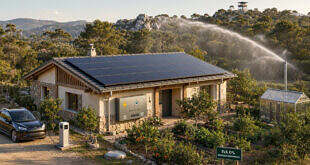
Will I be able one day to leave this world, knowing I have done my best to make it a better place than when I found it in my youth? I ask myself this question at least once a week. And that includes constantly checking my own volume of waste. In winter, I plant young trees in our botanical garden. I operate 40 solar modules, and the energy provided by the solar cells of these modules is not only used for the production of this magazine, but also to charge the battery of my electric car.
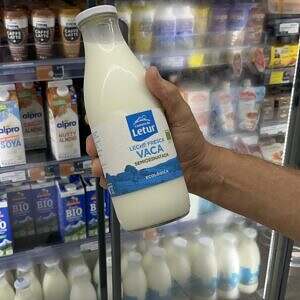 Everything has been prepared well in advance. My goal is to achieve zero CO2 emissions. I strive to no longer use petroleum products, or to burn gas or coal. And no, I don’t buy mineral water or milk in plastic bottles or disposable packaging. I look for a store where I can buy a reusable glass bottle on a deposit basis. So, I take an empty deposit bottle to the store, and, in return, I am given a receipt, which I can then use to obtain a discount when buying a new full bottle of mineral water. And that’s how I’ve been doing things for many years in Portugal, even though I’m swimming like a fish against the tide and the water is slowly running away beneath my fins. The stream is slowly drying up. In the whole of the Algarve, there are now only three stores left where I can find the deposit system for bottles of mineral water: at the three Apolónia supermarkets in Almancil, Galé and Lagoa. I don’t even want to mention all the other supermarkets that refuse to take back the empty bottles… Apolónia was the only supermarket to pass the ECO123 test. Among the organic food shops, the unpackaged goods store The Bank in Marmelete in the municipality of Monchique passed the test.
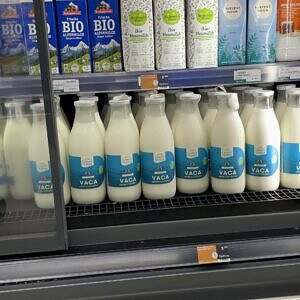 There is no longer a deposit system for milk. So, I buy my milk directly from the farmer. I bought a 5-litre stainless steel milk can and I take this to a goatherd friend of mine once a week. He exchanges it for five litres of goat’s milk, which I boil at home, pour into several glass bottles and put in the fridge. At the moment, I’m having problems with milk. My goatherd has sold all his goats and bought two cows instead, but he didn’t buy them for the milk. I no longer buy milk in Tetra Pak cartons because I would have to throw several empty cartons in the rubbish every week. So, I am currently looking for a goatherd who would like to offer me his milk directly, as well as yoghurt and cheese if possible. If you would like to make me an offer, please contact editor@eco123.info directly. My name is Uwe Heitkamp. I am the editor responsible for this issue, and you can also contact me by phone. The number is shown in the imprint.
Last week, the UN conference in Geneva, Switzerland, failed to agree about a ban on plastic. For the time being, I think we should continue negotiations and not be discouraged by this setback. After all, why should we allow the oil industry to force us to eat, drink and breathe microplastics? Who tells us consumers that we have to pack our food in plastic containers or wrap it in plastic and then throw it away? There are many other much healthier and much more environmentally friendly ways to package food. And, that way, we don’t have to throw anything away and we don’t produce any waste. I am in favour of leaving zero waste in this world. Even if this sounds like a strange utopian ideal, there is at least the possibility of trying out the concept of ZERO WASTE, of not producing a single kilogram of waste for at least a week. What do you have to do to achieve this?
 You would have to do everything differently when shopping: pay very close attention to where the food comes from and only accept food that is sold unpackaged. Think about it. I am opposed to the idea of food travelling 3,000 km, as described last week. We don’t need to drink milk from England in the Algarve. I am in favour of food being traded locally. Everything is fresh and organic; everything is local. I always take some empty containers with me when I go shopping. It starts with food for my dog and cats. And it ends with us humans.
When I buy fresh meat for my dog, it is packaged in a Tupperware container with a lid. When I buy dry food for my cats, I go to my cooperative and get a plastic bag that I have to reuse next week, or I take a cloth bag with me. This raises another fundamental question: what else could we do to stop emitting CO2? What can we do to reduce our carbon footprint in everyday life? What can we do to live in a climate-friendly way?
Zero waste is a concept that thinks about life from the end and can be implemented in many small steps. This can start, for example, by no longer buying tinned food, but only fresh food. Tinned fish – no – I buy fresh fish at the market. Or packing fruit in plastic bags? I take my fruit, starting with bananas, oranges, lemons, apples and grapes, and put them in a basket that I bring from home. Potatoes and carrots go at the bottom, onions above them, and tomatoes and grapes at the top…
Try the following. Go into a supermarket with a basket, a traditional woven raffia container that can hold all your groceries. Bear in mind that once the basket is full, your shopping is done. You only buy as much as you can carry yourself. And you avoid any packaging. Bring your own reusable packaging from home…
Because, if we continue as we have been doing, our world will become a giant rubbish tip, and the beautiful areas of nature will become fewer and fewer. Let’s put a stop to the throwaway society for a moment and think about how we can do better, how we can do things differently. Without rubbish.