 Eco123 Revista da Economia e Ecologia


26/09/2026 – 02/10/2026 Commentary by Uwe Heitkamp
Edition 38.2026
The Repsol Foundation’s project in Barranco de Madriros, Alferce
A view from the forestry section of the Esgravatadouro Cooperative, CRL Monchique
 Repsol’s reforestation project is due to be implemented in Barranco de Madriros. ECO 123 has also been working towards this same goal and has asked the Alferce Parish Council and the town hall for support. In any case, the project does not (yet) exist and nobody at a local level is aware of it.
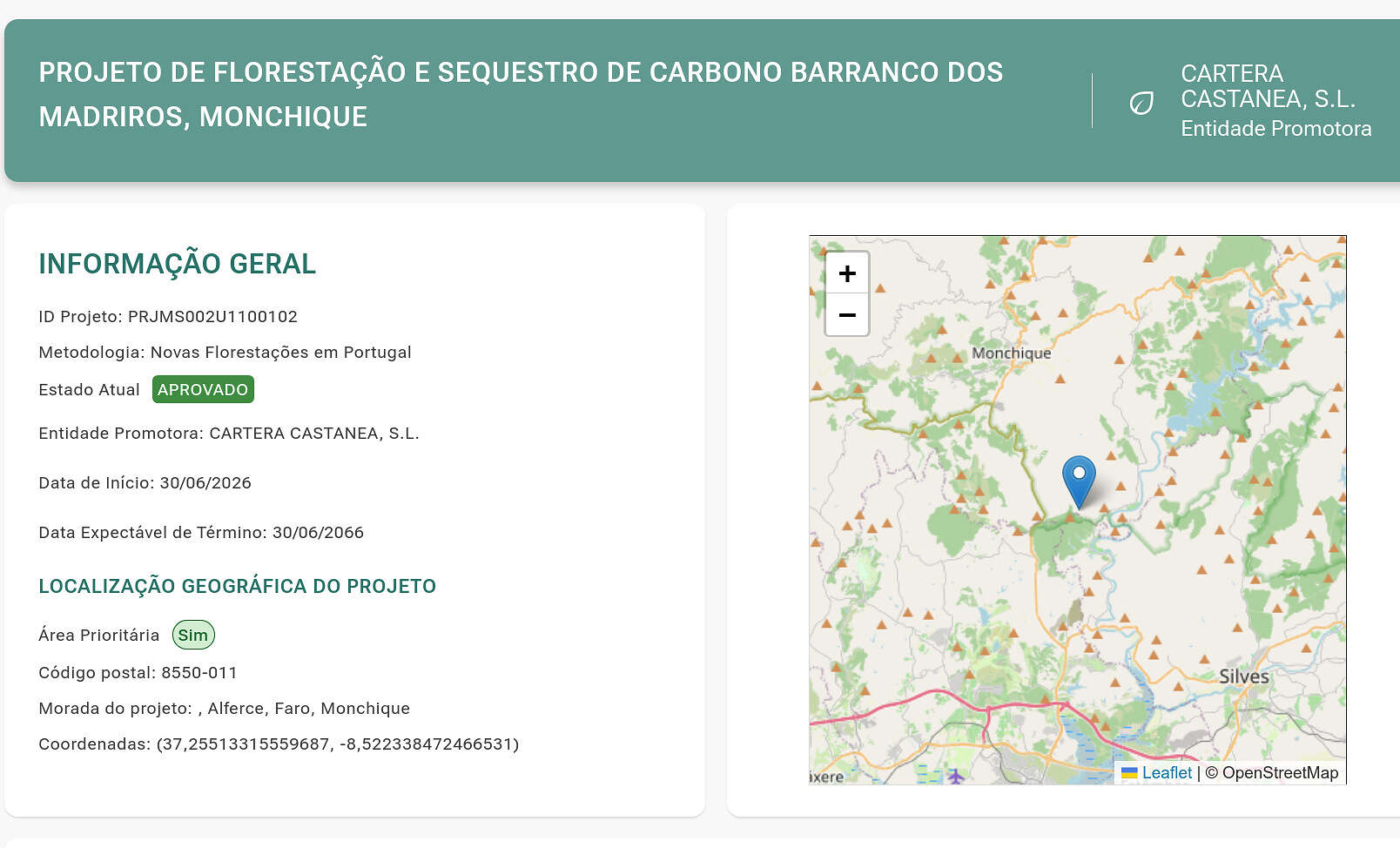
Why is Repsol – a company that normally drills for crude oil and sells petrol – investing money in reforestation and seeking media coverage? Is it just “greenwashing”? Or can you also make money from certificates on the Voluntary Carbon Market? (https://mvcarbono.pt/ ID Projeto: PRJMS002U1100102)
The maritime pine (Pinus pinaster), which lies at the heart of Repsol’s reforestation programme, is a species that thrives on fire and burns easily. In our view, it would be more useful to choose a variety of tree species: arbutus certainly, as well as olive, carob, cork-oak and almond trees – trees that are difficult to burn and which bring other benefits. For example, quercus canariensis, the Monchique oak.
The more diverse the tree species and the more useful they are for the day-to-day needs of a farmer or forester, the more sensible and valuable sustainable reforestation will be.
Or conversely: the lower the yield of a tree species that is, at the same time, highly flammable, the more pointless reforestation will be. For this reason, the correct choice of tree species for reforestation is crucial. It is also important to take into account the water consumption of each species in the area where it is planted.
 We must constantly ask ourselves: why are we planting a tree?
The adoption of the Scots pine as the tree species of choice is an outdated solution. This species was chosen in the last century because it provided the timber needed for the construction of fishing boats. The tree provided timber for shipbuilding at the Portimão shipyards and could be replanted and then felled again after two generations. (We already have a pine forest on our doorstep, planted in 1905, which is now 121 years old.)
We should plant a forest capable of withstanding the current challenges of climate change. We know that maritime pines pose a risk of increasing the spread of forest fires.
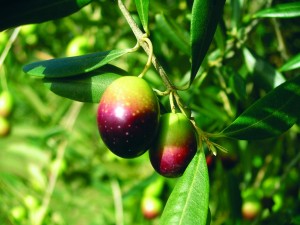 As far as reforestation is concerned, our aim is to select species whose fruits are suitable for traditional processing. For example, olive trees, whose olives can be turned into local virgin olive oil at the Alferce mill.
Carob has also been increasing considerably in value, both in the food and cosmetics industries, and a plot of land planted with carob trees will appreciate in value quite dramatically. As the price of a plot of land increases, so too does the interest in its use and preservation.
Actively preventing forest fires.
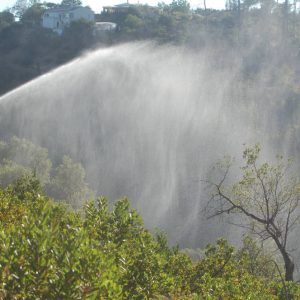 When we talk about protection in the municipality of Monchique, we are referring to the active management of forested areas, which can create and secure jobs. A group of people – be it a family, a company, an association or a cooperative – actively looks after the forested area – every day. New plantations are not just simply planted and left to their own devices; they are also actively protected against the risk of further forest fires, for example through a sprinkler system and the collection and storage of water reserves (rainwater) in cisterns.
We approach reforestation from a different perspective, particularly with regard to the protection of nature and property, but we are also concerned with the many opportunities that reforestation presents for creating traditional and meaningful employment.
The aim is to transform non-forested land into a new, resilient forested area, with an estimated sequestration of a considerable amount of CO₂ over future generations (an average of 14 tons per hectare each year). As well as carbon sequestration, the project aims to contribute to forest restoration, the protection of the soil against erosion, the conservation of biodiversity and water resources, and the revitalisation of the local rural economy. And shade is everything; without it, nothing else matters. Conclusion: Repsol’s reforestation project can safely be consigned to the archives. File it away. Until the next forest fire.